|
|
||||||||||||||||||||||||||||||||||||||||||||||||||||||||||||||||||||


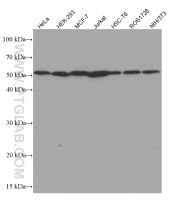
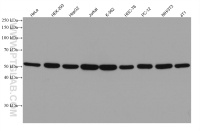
| Positive WB detected in | HeLa cells, A549 cells, Jurkat cells, HSC-T6 cells. NIH/3T3 cells, Pig brain, Rabbit brain, Rat brain, Mouse brain, Chicken brain, HEK-293 cells, HepG2 cells, K-562 cells, HHSC-T6 cells, 4T1 cells, CHO cells, mouse pancreas, rat pancreas |
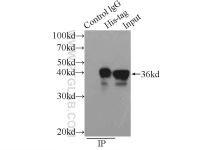
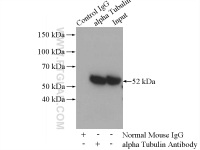
| Positive IP detected in | HeLa cells |
| Positive IHC detected in | human kidney tissue, human brain tissue, human colon cancer tissue, human heart tissue Note: suggested antigen retrieval with TE buffer pH 9.0; (*) Alternatively, antigen retrieval may be performed with citrate buffer pH 6.0 |
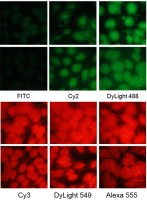
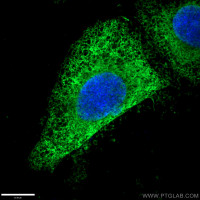
| Positive IF detected in | MDCK cells, HeLa cells |
| Positive FC detected in | HeLa cells |
推荐稀释比
| Application | Dilution |
|---|---|
| Western Blot (WB) | WB : 1:20000-1:100000 |
| Immunoprecipitation (IP) | IP : 0.5-4.0 ug for IP and 1:5000-1:50000 for WB |
| Immunohistochemistry (IHC) | IHC : 1:20-1:2000 |
| Immunofluorescence (IF) | IF : 1:500-1:2000 |
| Sample-dependent, check data in validation data gallery | |
产品信息
The immunogen of 66009-1-Ig is Beta Actin Fusion Protein expressed in E. coli.
| Tested Applications | FC, IF, IHC, IP, WB, ELISA |
| Cited Applications | ChIP, CoIP, ELISA, IF, IHC, IP, WB |
| Tested Reactivity | human, mouse, rat, hamster, monkey, dog, pig, chicken, rabbit, zebrafish |
| Cited Reactivity | A.fumigatus strains, Aedes albopictus, Arabidopsis, bovine, canine, chicken, Cyprinus carpio, dog, Drosophila, duck |
| Immunogen | Fusion Protein |
| Host / Isotype | Mouse / IgG2b |
| Class | Monoclonal |
| Type | Antibody |
| Full Name | actin, beta |
| Synonyms | ACTB, Actin, actin, beta, Actin, cytoplasmic 1, B actin, Beta actin, F actin, PS1TP5BP1, β actin |
| Calculated molecular weight | 42 kDa |
| Observed molecular weight | 42 kDa |
| GenBank accession number | NM_001101 |
| Gene symbol | ACTB |
| Uniprot | P60709 |
| Gene ID (NCBI) | 60 |
| RRID | AB_2687938 |
| Conjugate | Unconjugated |
| Form | Liquid |
| Purification Method | Protein A purification |
| Storage Buffer | PBS with 0.02% sodium azide and 50% glycerol pH 7.3. |
| Storage Conditions | Store at -20°C. Stable for one year after shipment. Aliquoting is unnecessary for -20oC storage. |
背景介绍
Actins are highly conserved globular proteins that are involved in various types of cell motility and are ubiquitously expressed in all eukaryotic cells. At least six isoforms of actins are known in mammals and other vertebrates. Beta-actin (or β-actin) is a cytoskeletal actin isoform, highly conserved and ubiquitously expressed in eukaryotic organisms, making it a commonly used "housekeeping gene" in many laboratory techniques. It has been widely used as the internal control in RT-PCR and Western Blotting. The isotype of this antibody is IgG2b.
What is the molecular weight of beta-actin?
42 kDa
What is the function of beta-actin?
Actins are a key part of the cytoskeleton and are involved in cell motility, structure, and signaling, with beta-actin as part of the contractile apparatus. Beta-actin is located in the cytoplasm of non-muscle cells, particularly where the plasma membrane meets the cytoskeleton (PMID: 1993736) and is found co-distributed with alpha-actin (PMID: 9490838).
What are the applications for beta-actin?
As it is ubiquitously and constitutively expressed, beta-actin is a useful loading control in techniques such as RT-PCR and Western Blots to measure baseline expression and degradation. Beta-actin can be used as a reference gene to normalize mRNA or protein levels in quantitative studies of expression. Although some evidence suggests variation in tissue types and developing embryos (PMID: 23099774) if expression is stable across conditions, beta-actin is still considered by many to be a suitable gene for normalization.
Beyond its role as a housekeeping gene, it has been shown that beta-actin associates with endothelial nitric-oxide synthase (eNOS) and can therefore regulate nitric oxide activity in endothelial cells (PMID: 12734108).
What are the post-transcriptional modifications (PTMs) to beta actin?
Alterations to actin proteins can modulate their properties and function. While small molecules are known to alter actin, post-translational modifications such as phosphorylation and acetylation can also affect actin (PMID: 23195437). Modifications to actin have been associated with diseases including but not limited to age-related macular degeneration (PMID: 17652714), cardiovascular disease (PMID: 21232667), and Alzheimer's disease (PMID: 11246152).
For murine tissue sample, conjugated antibody (HRP-66009) or rabbit antibody (20536-1-AP) is preferable.